Systems Engineering: Diagnosing Bare-Metal Boot Failures via IPMI
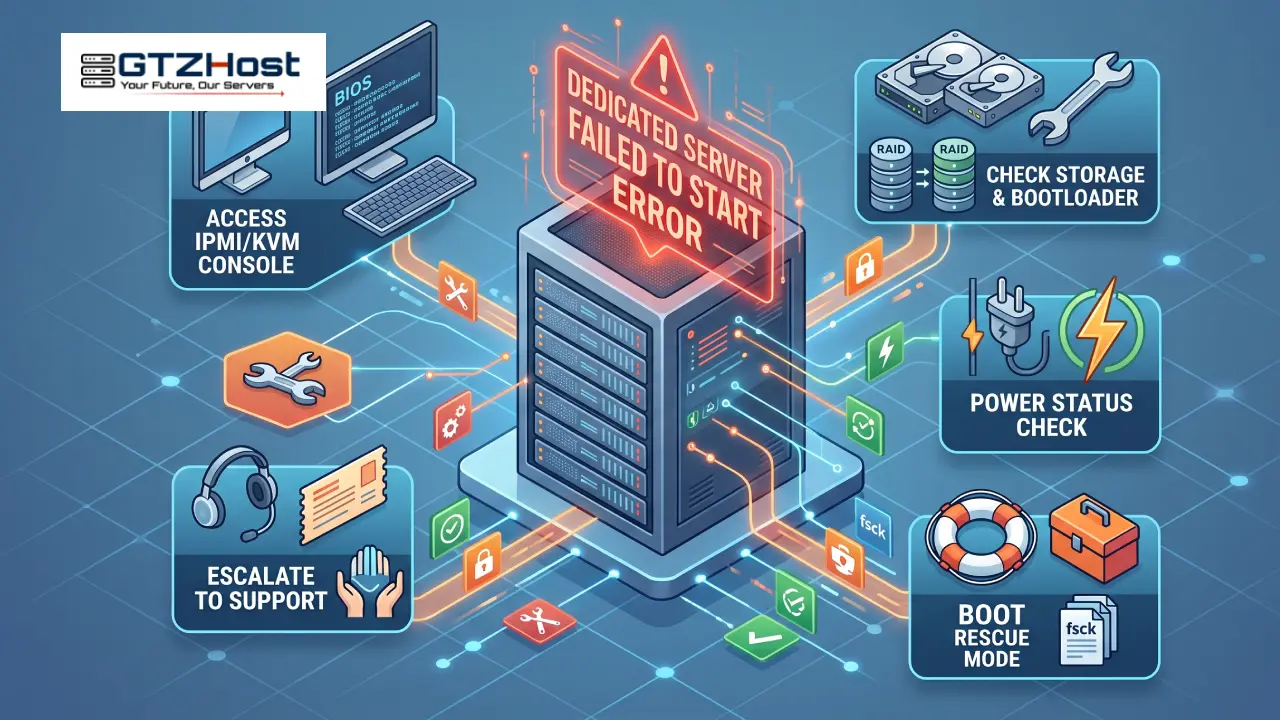
When a bare-metal node fails to initialize, network-layer diagnostics (ICMP, SSH) are obsolete. Incident response shifts entirely to the Baseboard Management Controller (BMC) and IPMI.
Here is the deterministic workflow for diagnosing boot state failures.
Phase 1: POST and ACPI States
Access the KVM-over-IP console. If the VGA output is null and chassis telemetry indicates power delivery, the motherboard is failing Power-On Self-Test (POST). This is a Layer 1 fault (ECC memory failure, PCIe bus short, or CPU seating). Do not issue ACPI shutdown commands; escalate to data center remote hands.
Phase 2: Storage Controller and Bootloader Handoff
If POST completes but the system halts, inspect the UEFI/BIOS boot order and the RAID controller state. A degraded RAID 1/5/6 array should gracefully boot in a degraded state. If it drops to a "No Bootable Medium" prompt, the controller has likely lost its foreign configuration, or the NVMe bus has dropped the nvme0n1 device entirely.
Phase 3: Kernel Panic and fsck Loops
If the bootloader (GRUB/systemd-boot) successfully hands off to the kernel, but the system drops to an emergency shell, the fault lies in the initramfs or filesystem mounting.
Common vectors:
UUID Mismatch: An invalid entry in
/etc/fstabforcing a hard mount failure.Orphaned Inodes: An unclean shutdown triggering a blocking
fsckloop.
Resolution: Boot into PXE Rescue Mode. Execute lsblk and blkid to map partitions, mount the root filesystem, chroot into the environment, and rebuild the initramfs or correct the fstab mappings.
Mastering these low-level interactions ensures operators managing dedicated servers maintain strict SLAs during catastrophic infrastructure events.